
Smorodina — a school with a soul
Smorodina — смородина — is the currant berry: small, vivid, and impossible to forget once tasted.
About the founder#
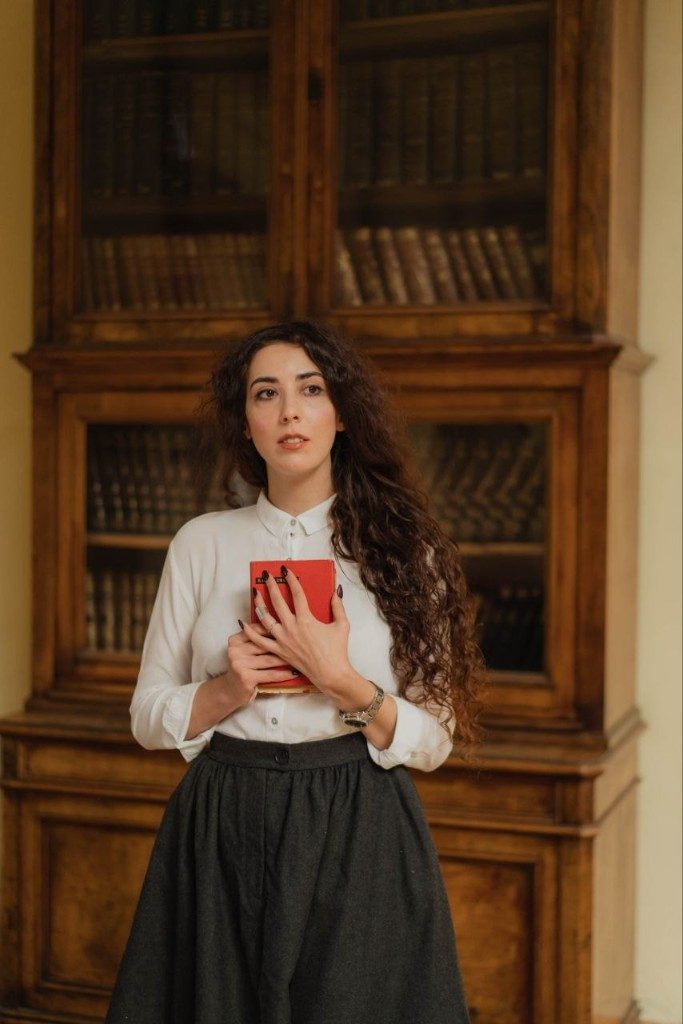
Anna Kondratenko
Founder & lead instructor
I am a Russian philologist, a teacher of Russian as a foreign language with more than ten years of experience, and someone for whom language was never just an academic subject.
For me, language is a way of thinking and seeing the world. It is literature and history, intonation, a joke at the table, a conversation with a stranger, and a line of poetry that cannot be translated exactly into another language.
Over the years I have worked with students of every age — from four-year-olds to adults over sixty. Among them are schoolchildren and university students, applicants, specialists, and entrepreneurs. I have taught Russian to American, Chinese, and Georgian learners — from a first acquaintance with the language to an advanced level.
It is from this experience that Smorodina School gradually grew — a school of Russian language and cultural immersion that I founded in Georgia.
From philology to a living language
My professional path began with literature.
I graduated from Tbilisi State University in Russian Philology, earned a master’s degree in the theory and practice of translation, and then defended a doctoral dissertation on Russian and Polish symbolism. Later I completed professional retraining in the methodology of teaching Russian as a foreign language at Lomonosov Moscow State University.
I taught the history of Russian and Polish literature and the literature of Russian emigration at Tbilisi State University. Later I worked with students at MSU’s Institute of Russian Language and Culture.
But what mattered most to me was the experience of building language immersion.
From Yale Study Abroad in Georgia to Smorodina
I stood at the origins of Yale’s Study Abroad in Georgia summer program and built its local infrastructure almost from scratch.
For the program I assembled a network of host families, teachers, guides, and local partners; I helped organize the academic process and design the cultural program and routes across the country. Then for several years I combined the role of local coordinator with teaching Russian to American Yale University students. My work included program management, organizing instruction for groups at different levels, student housing, and cultural trips across Georgia.
It was there that I saw once more what I had long believed as a teacher: language cannot truly be separated from life lived in that language.
You can master the cases, know verbal aspect, and read complex texts — and still freeze when a fast conversation starts at the next table, someone jokes, interrupts, or uses an expression that never appeared in a textbook.
That is why Smorodina largely continues an idea I practiced for years: first give the student a serious language foundation, then help turn Russian from a language of study into a language of their own experience.
Literature — the other half of my profession
I am not only a teacher.
I am a literary scholar, researcher, translator, and poet. My academic work is devoted to Russian and Polish literature, Slavic culture, and literary translation.
I have lived with literature since youth: I became a laureate of poetry festivals and contests in Russia, Georgia, and Armenia, received awards for literary translation, and took part in scholarly conferences and literary projects.
Today that side of my life continues in Batumi: I organize and host regular poetry evenings where contemporary authors and readers meet, poems are read, and conversations about literature unfold.
For me all of this is directly tied to teaching. Philology taught me how language is built; translation — to feel the finest difference between near-synonyms; research — to seek precise answers; and poetry — to hear what a grammar rule cannot always explain.
Why I teach online
I never set out to build a life around a single department or a single classroom.
Before the pandemic I had my own studio for in-person lessons in Tbilisi. Later most of my teaching moved online — first out of necessity, then because the format turned out to fit my life remarkably well.
I travel a great deal: since 2020 I have visited more than twenty countries. Being able to keep working with my students from different parts of the world gave me a professional freedom I treasure.
So online teaching for me is not a temporary substitute for “real” university work. It is a conscious choice that lets me combine teaching, research, literary projects, travel, and building my own school.
And Smorodina became the next step: a chance to gather everything I learned over these years into one system.
Why I created Smorodina
I wanted a school where you do not have to choose between academic quality and living human exchange.
Here we can dig seriously into grammar — and discuss contemporary speech at the same time. Read literature — and learn to catch a joke. Talk about culture — and notice how it shows up in the most ordinary words and intonations.
And after online lessons you can take the next step: come to Georgia and try living in Russian — talking, traveling, meeting people, and discovering that a language which once existed only in a textbook is gradually becoming your own.
That is exactly why I created Smorodina.
- PhD in Philology, Tbilisi State University
- Organized local infrastructure for Yale Study Abroad in Georgia
- Literary translator, critic, and poet-essayist
- Remote and in-person RFL for ages 4–60
PhD · Yale University · Tbilisi State University
Our story#
Smorodina was born from a simple conviction: language is not a subject you study — it is a world you inhabit.
We chose Georgia for its warmth and magnetic blend of European and Caucasian culture — a place where Russian is lived, not merely taught. The school’s intellectual roots are in Tbilisi; the seasonal immersion runs in Batumi, on the Black Sea.
What we believe#
Excellence without coldness
High standards wrapped in genuine care.
Culture as curriculum
Every poem, meal, and market visit is a lesson.
Community by design
Small cohorts, lasting friendships, shared ambition.
Live in Georgia
Study and stay in Batumi by the Black Sea; carry the school’s Tbilisi roots — hospitality, culture, and an international community — into every week of the season.